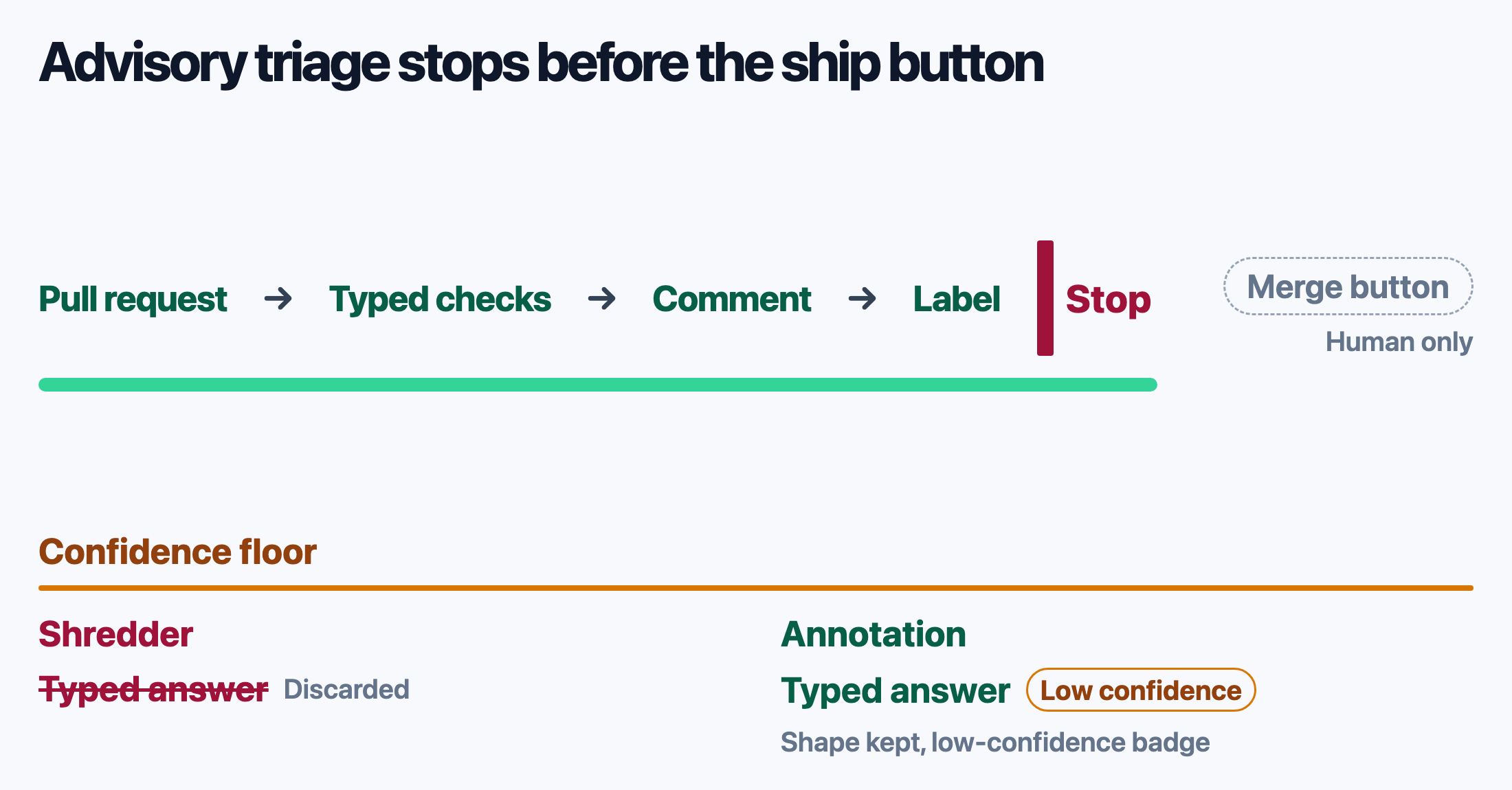
Three purple agent chips joined by a line stop at a coral bar, short of a dashed blue circle that stands for the human merge button.

My triage bot was busy and said nothing

The first time my triage bot ran for real, it did everything except the triage. It left its comment. It set its label. The checks looked calm enough that nobody panicked. Behind that, every typed answer the classifier had produced (a classifier output with a declared form, such as a named type or a score band, as opposed to free text) had been thrown away by a confidence cutoff borrowed from another classifier, so the public result read unknown. ...

November 8, 2026 · Dave Voyles
A tray of four round lamps: three lit green with check marks, and one dark with a dashed outline. It stands for green checks that say nothing about the test nobody scheduled.

Tests that never ran now run

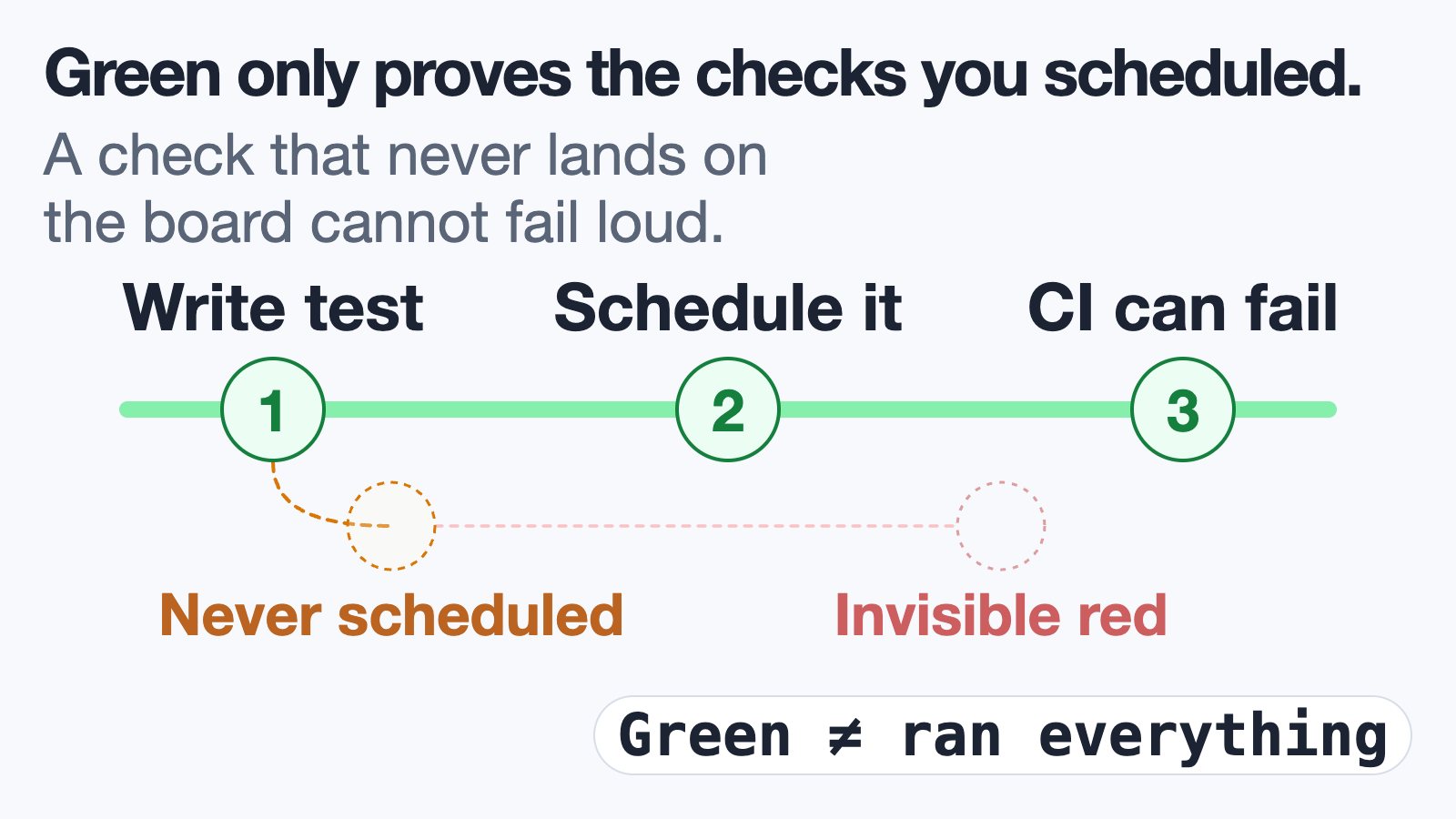
A case that checks how a scene render names its output broke on the default branch and stayed broken for about six hours, until someone ran it by hand. CI never flagged it, because the file that held that case had sat off the continuous-integration checks for a long time. The dashboard had not been asked to run that file. The rule I took from it is that green only proves the checks you scheduled. That case never ran in CI, and the failure never showed up. ...

October 19, 2026 · Dave Voyles
Two separate computer desks — a coding laptop desk and a personal-assistant planner desk — each with its own door and a shared one-time check stamp

Two brains, two jobs: Bender engineers, Maya assists

I used to want one agent that could do everything. Write the PR, tidy the calendar, answer Slack, review the diff, remind me about lacrosse pickup — one conversational surface, one “brain,” one place to yell when something was wrong. It felt efficient until the failures started rhyming. Coding work leaned on personal-assistant shortcuts. Calendar noise interrupted engineering focus. A gateway that looked like a helpful front door became a noisy hallway where every request sounded the same, and “the agent is up” — meaning the process is running, the light is on — stopped meaning either job was actually done. ...

September 26, 2026 · Dave Voyles
A bright green status panel beside an open LAN hatch the suite never checked

Green suites that hid holes: fleet gates that plant failure

I have shipped test suites that were green for the life of a repo and still left a hole on the LAN. By green I mean the dashboard color everyone treats as “safe to ship” — the check passed, the badge is cheerful, nobody is paging. CI (continuous integration) is the automated check-runner that usually paints that color: on every push or pull request it runs a suite of tests and jobs, then reports pass or fail. Green CI is valuable when it asked the hard questions. It is dangerous when it only asked the easy ones, or never ran the suite that looked like coverage. ...

September 22, 2026 · Dave Voyles
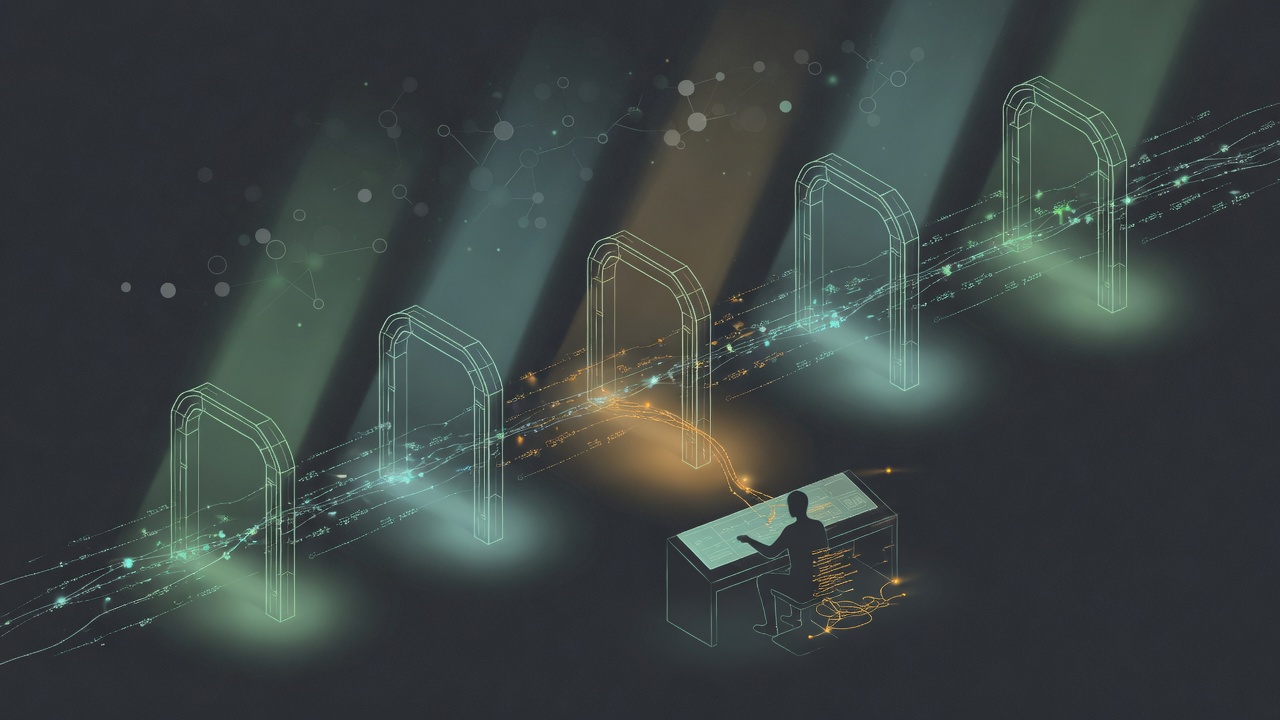
Illustration of eval checkpoint arches with human-in-the-loop control

Eval gates are not optional theater

This is part 1 of the Agent production system series. Start with the system map if you haven’t read it yet. On the interactive diagram: Eval gates. Demo agents look smart until they touch a real repo. In a demo, the agent writes the code, the code runs once, everyone claps. Nobody checks what happens the second time, or the tenth, or the time the agent decides the fastest way past a failing test is to delete the test. Then you learn the hard lesson: intelligence without a gate is just a faster way to ship a bad change. ...

July 28, 2026 · Dave Voyles