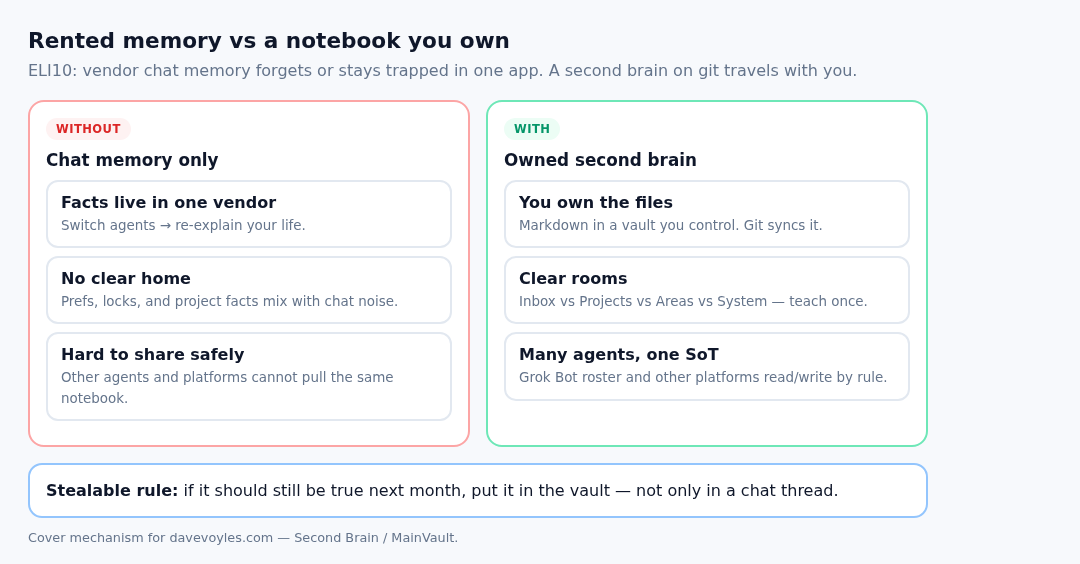
Rented chat memory versus a second brain you own

The second brain I own (and why chat memory is not enough)

Chat memory is convenient until you change apps. I run a Grok Bot roster every week — Chief of Staff, specialists, digests, drafts — and I also point other agent platforms at the same durable facts about how I work. If those facts only live inside one vendor’s chat memory, I am not building a system. I am renting amnesia with a nice UI. So I keep a second brain I own. Mine is called MainVault: a markdown vault, synced with git, treated as shared memory across agents. I already wrote the high-level “owned notebook both stacks get” frame when piloting Muse beside Grok Bot. This post is the mechanism: how that notebook works day to day. No private repo links. The point is the pattern. ...

September 16, 2026 Â· Dave Voyles
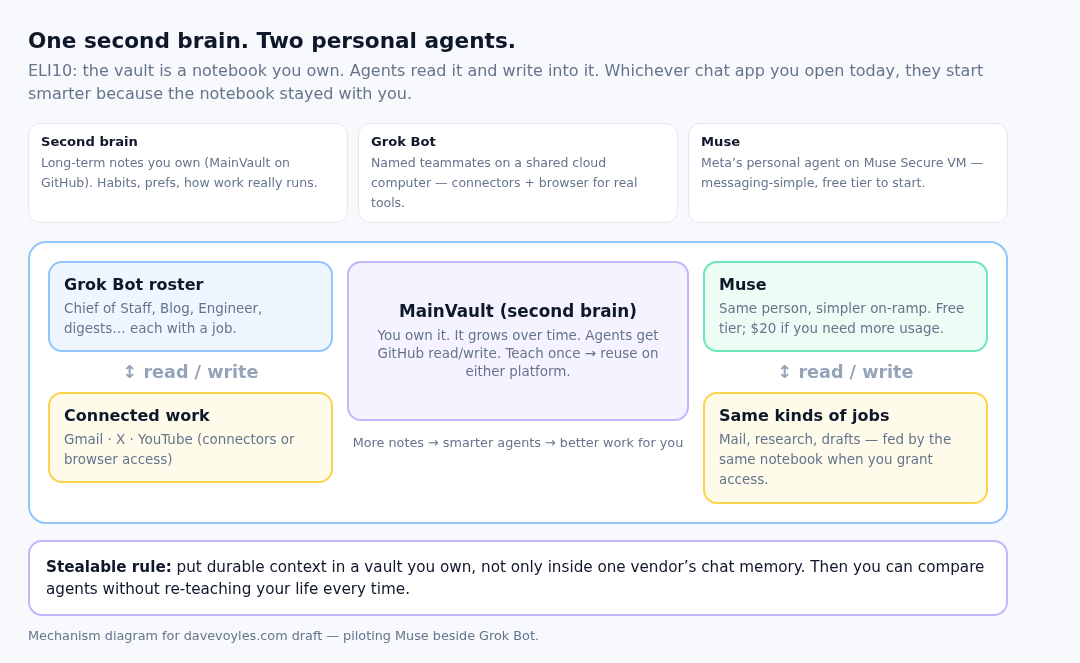
Second brain hub across Grok Bot and Muse

Piloting Muse beside Grok Bot (and why Dad started on Muse)

I am running two personal agents at once right now: Grok Bot and Meta’s new Muse. That is not a brand loyalty bit. It is a bake-off with an honest mismatch of maturity: I am piloting Muse next to a mature multi-bot Grok Bot desk I already run. This is not a feature-parity scorecard. Muse is new and simple. Grok Bot is a roster I have already wired. I want to feel where each one wins on its own terms before I pretend there is a single winner. ...

September 14, 2026 Â· Dave Voyles
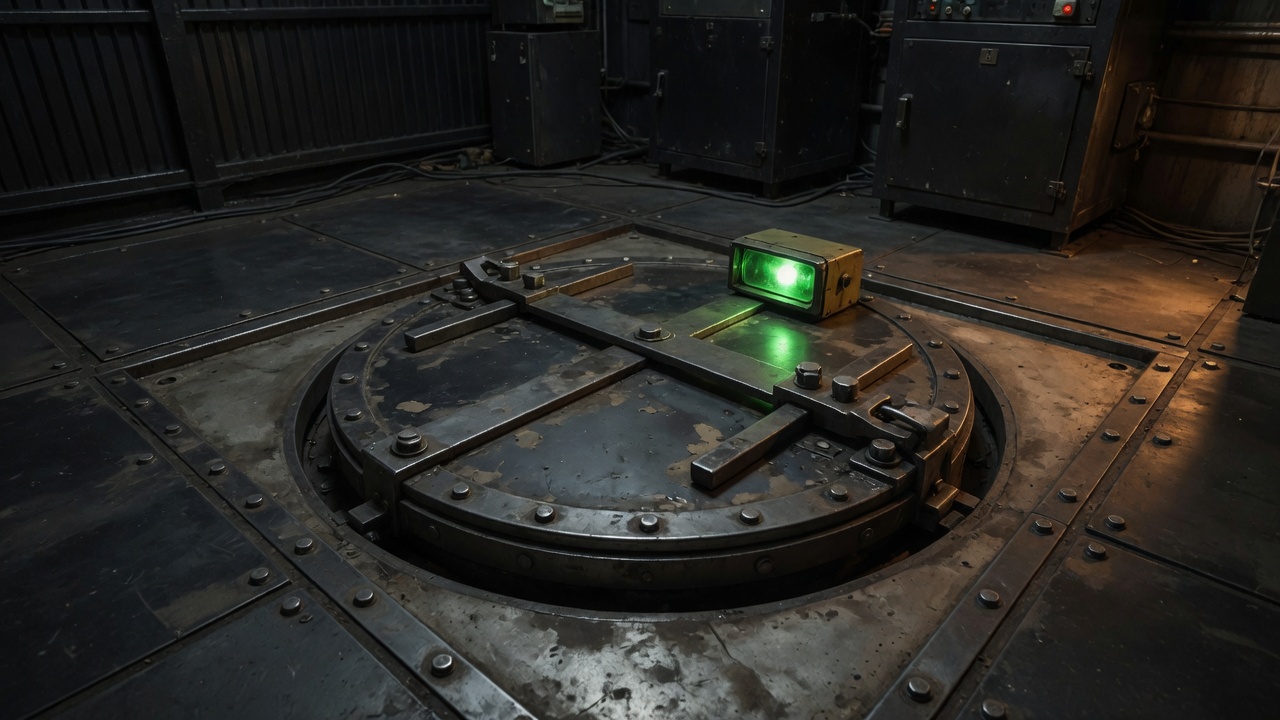
Locked steel hatch in a dark factory floor — the landing gate that will not lift without a stamp

The last click is still yours

Companion to GitHub tokens for agent fleets and the agent production system series. Words I use below Agent — a program that writes and lands code for you, in a chat session Pull request (PR) — a proposed change waiting for review; on GitHub it has its own page, with a button to accept it Merge — accepting that proposed change so it becomes part of the main project GitHub App — a robot you install on a GitHub project so it can click buttons as itself — not as you; it can approve, and it can merge; people treat this robot as the “real” setup, and it is not — it is extra (this post does not tell you how to install one; if you later want that robot, read the token post) Lock — a program that says no when a rule is broken; the agent cannot talk it into a yes; I also call this the landing floor Stamp — a review that applies to one exact version of the code; “looks good” in chat is not a stamp Automatic tests — checks that run by themselves when you propose a change; green means they passed Those seven words are the whole toolkit. Now the point. ...

August 21, 2026 Â· Dave Voyles
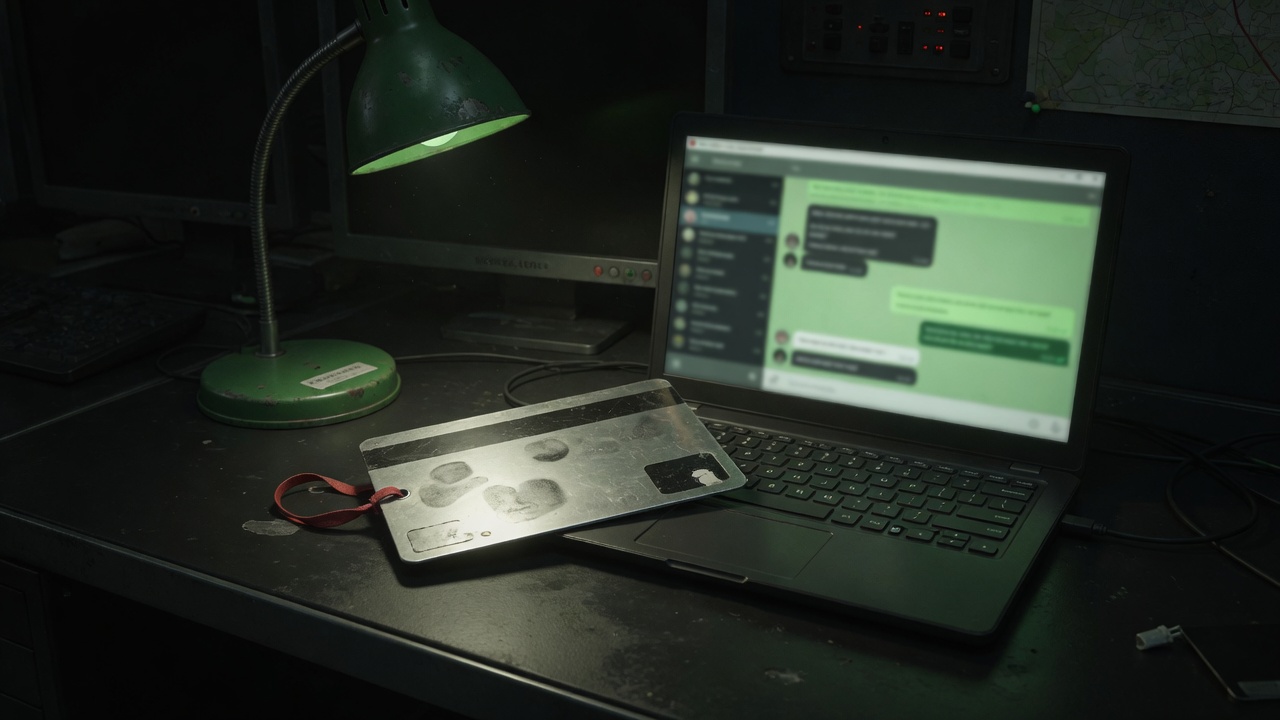
A long-lived access key left exposed on an open laptop in a dark ops room

Don't paste your GitHub key in chat

Companion to The last click is still yours and the agent production system series. Words I use below Agent — a program that writes code for you in a chat session Pull request (PR) — a proposed change waiting for review; on GitHub it has its own page, with a button to accept it Merge — accepting that proposed change so it becomes part of the main project Personal login — you, signed in as yourself; when you type commands, GitHub sees your name GitHub App — a robot you install on a GitHub project so it can click buttons as itself — not as you; it can approve, and it can merge Short-lived token — a temporary key the robot gets to prove it may click; it dies in about an hour, and after that it is junk PAT (personal access token) — a long-lived key tied to you; if it leaks into a chat log, it keeps working until someone turns it off Broker — a small program that hands out a short-lived token when the rules say yes; the agent asks, the broker decides, and the agent does not invent a key Automatic tests — programs that run by themselves when you propose a change; green means they passed Those nine words are the toolkit. Now the point. ...

August 18, 2026 Â· Dave Voyles
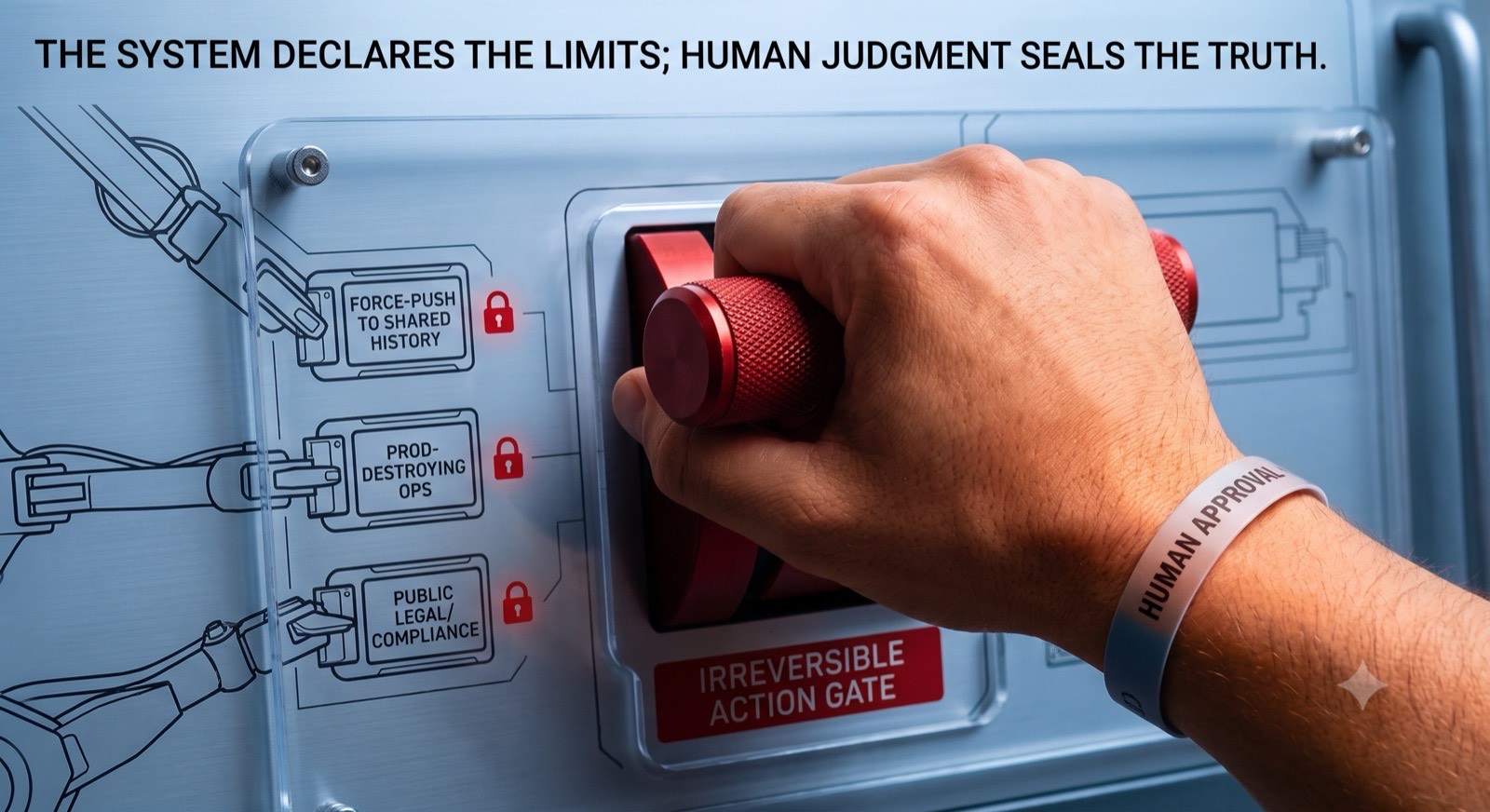
Hand on a red irreversible-action gate control, with force-push, prod-destroying ops, and legal/compliance locked out

What I will not automate

This is part 6 of the Agent production system series. Previous: Claim safety. Later: GitHub tokens and the last click. Words I use below Agent. A program that writes and lands code for you, in a chat session. Automate. Let the agent do the step without you. Work path. The steps from idea to shipped. I also call this the funnel. The middle is plans, code, and tests. The edges are the start and the finish — where someone can get hurt. ...

August 14, 2026 Â· Dave Voyles
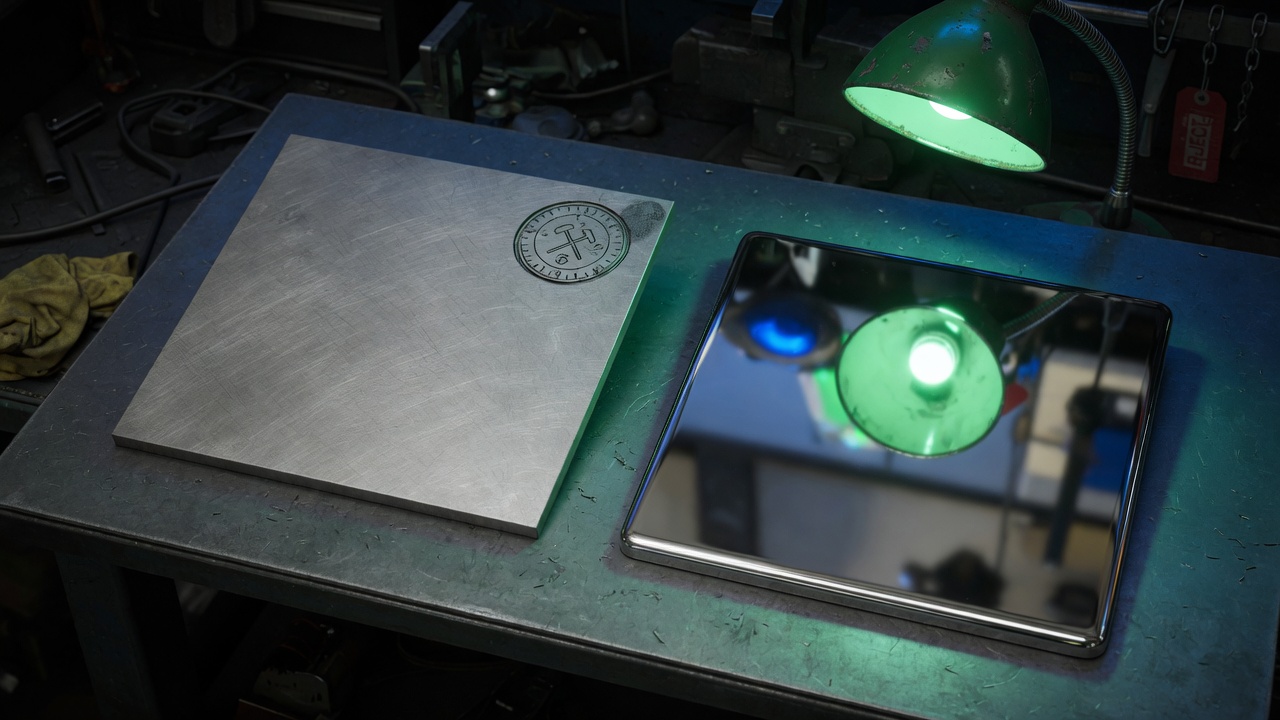
Two steel plates on a bench — one honestly stamped, one only shiny

Claim safety: evidence before metrics

This is part 5 of the Agent production system series. Previous: From Xbox SLAs to agent fleets. Words I use below Agent — a program that writes words or code for you, in a chat Claim — a sentence that says a number, a job title, or who made a thing (true or false) Evidence — the proof you can point at (a file, a date, a source) Metric — a number inside a claim Allowlist — the short list of numbers I may print in public; if it is not on the list, it does not ship Authorship — who made a thing (running someone else’s tool is not the same as making it) Gate — a check that can say no (a wish in the instructions is not a gate) Those seven words are the whole toolkit. Now the point. ...

August 11, 2026 Â· Dave Voyles
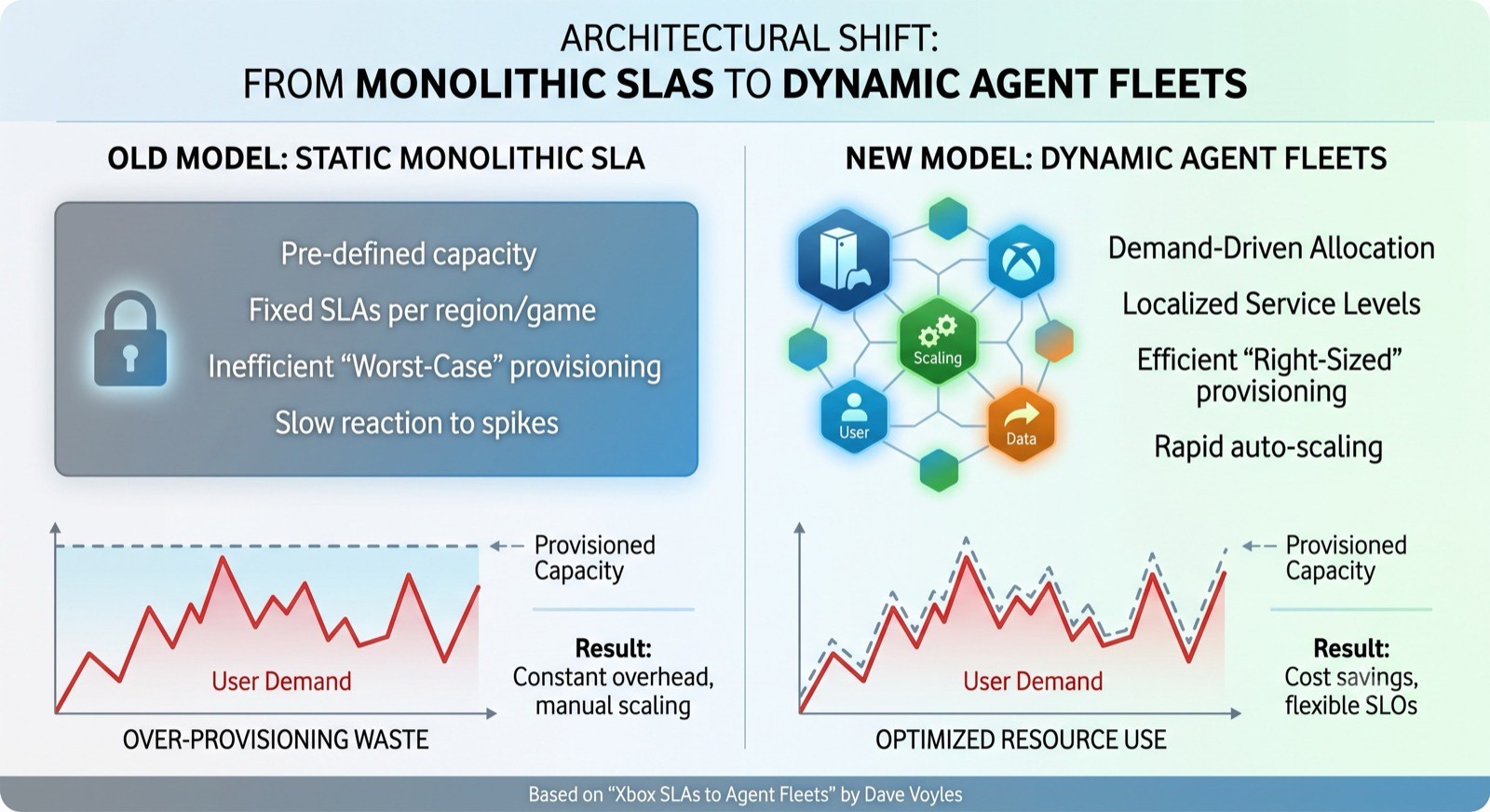
Diagram comparing static monolithic SLA provisioning to demand-driven dynamic agent fleets

From Xbox SLAs to agent fleets

This is part 4 of the Agent production system series. Previous: Docker homelab ops. Constellation: the whole agent production map — especially Orchestrator, Eval gates, and Human approval. I am a former Senior Technical Program Manager at Xbox/Microsoft. That sentence is past-tense on purpose — and it still explains how I design agent systems. People hear “TPM” and picture a calendar full of status meetings. At its best, platform TPM work is the opposite of that caricature: critical path, risk, multi-team alignment, and SLA performance under real blast radius. Someone has to know what is actually on the path to “done,” what can kill the ship window, which teams are blocked on which contract, and when a green dashboard is lying. That is the job. ...

August 7, 2026 Â· Dave Voyles
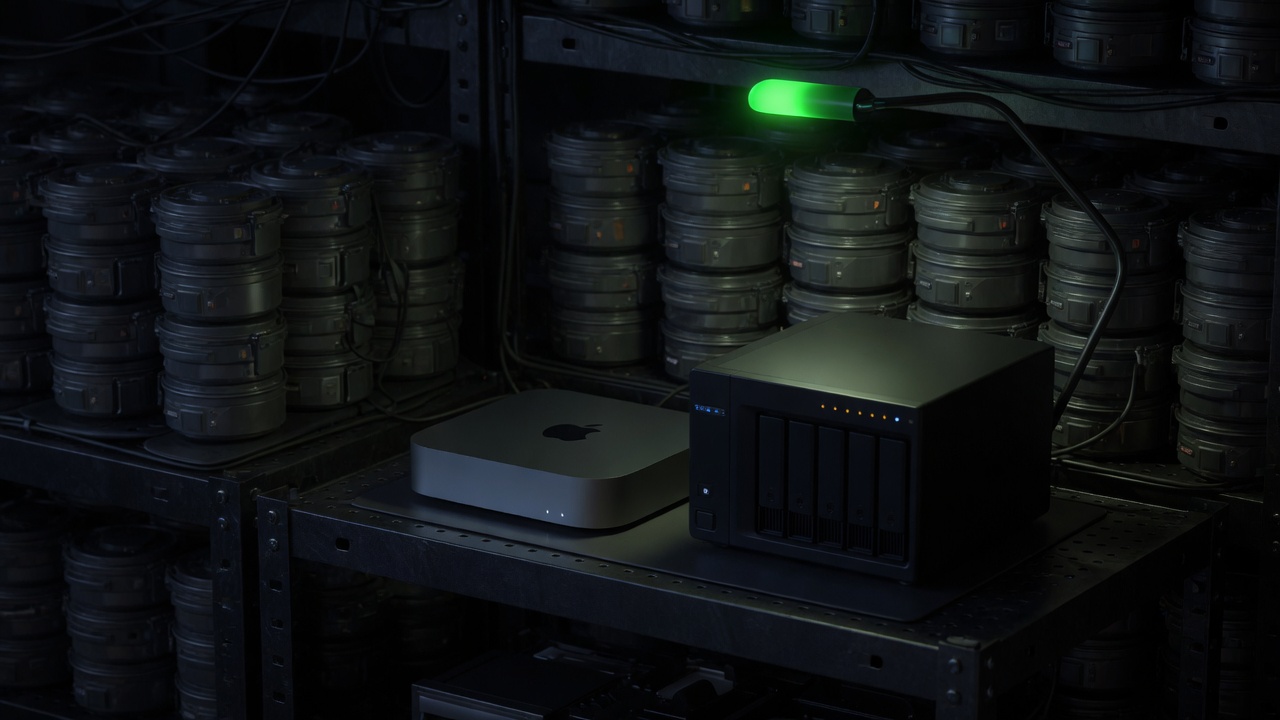
Mac Mini and NAS on a dark rack with container canisters — the homelab host layer

Twenty-plus containers and agent-operated ops

This is part 3 of the Agent production system series. Previous: Human approval. Constellation nodes: Docker host, Azure / ADO, Dashboards. Words I use below Homelab — the small, always-on computer setup in my house that runs real services for the household and for agents, not a laptop demo that dies when I close the lid Container — a boxed-up app (and its dependencies) that runs the same way on different machines; if one misbehaves, it fails in a smaller blast radius than “the whole computer” Compose — a config file that says which containers to start, how they connect, and what secrets they get, so you recreate the world from files instead of folklore OrbStack — the Docker runtime I use on the Mac Mini (think “Docker Desktop, but lighter on Apple silicon”) so containers actually run on that host Reverse proxy — one front door for many services; you hit one place instead of a pile of bookmarked :port URLs VPN gateway — a container that holds the download traffic behind a tunnel; if the tunnel drops, that traffic drops with it instead of leaking out the front door Watchtower — a helper that updates container images on a schedule, but only for services I’ve labeled as allowed to drift Agent-operated ops — agents can propose and run routine operations under the same gates as code — not root plus good intentions Those eight words are the toolkit. Now the point. ...

August 4, 2026 Â· Dave Voyles
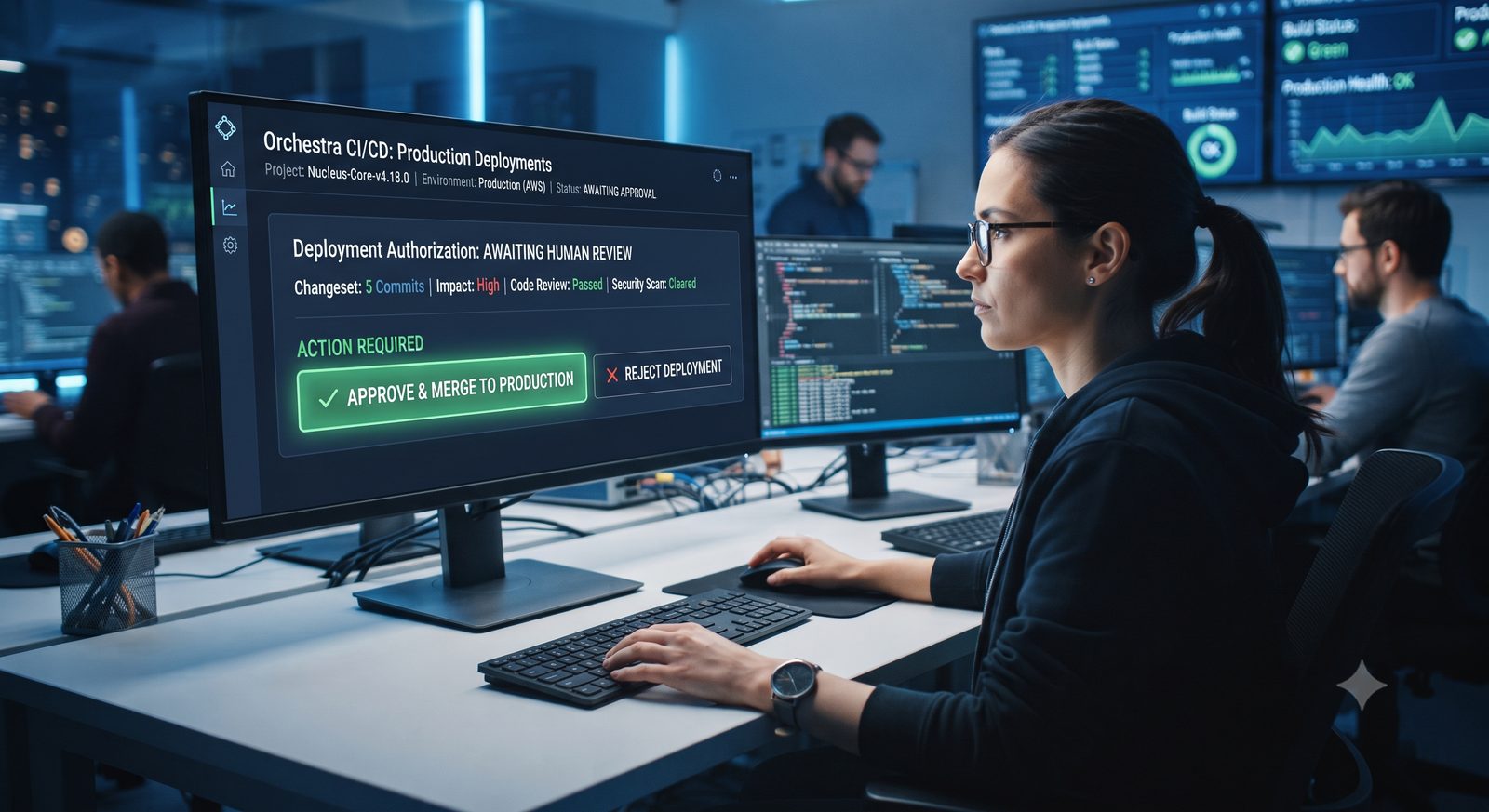
An engineer reviewing a deployment authorization screen showing Approve & Merge to Production and Reject Deployment options, awaiting human review

Human approval: the merge button still matters

This is part 2 of the Agent production system series. Previous: Eval gates are not optional theater. Constellation node: Human approval. Words I use below Agent — a program that writes code or words for you, and can use tools, in a chat or a job queue Pull request (PR) — a proposed change to a code repository; someone (or something) asks to land a diff, and reviewers say yes or no Merge — accepting that pull request into the main line of code, so the change becomes part of what ships Force-push — overwriting history on a branch; useful in cleanup, dangerous when it erases work other people (or agents) already built on Irreversible action — something hard or expensive to undo (delete data, rotate a secret into the void, change production infrastructure, send a public message you cannot unsend) Approval identity — a separate login or app credential whose only job is to approve and merge a reviewed pull request (not the same credential the agent uses to write code day to day) Decision brief — a short package an agent hands a human: what it wants to do, why the gate fired, what it already checked, and what it needs you to decide — not a guilt trip and not a demand Action class — a bucket of similar actions that share one autonomy rule; routine merges after checks can be auto, irreversible carve-outs always pause Those eight words are the toolkit. Now the point. ...

July 31, 2026 Â· Dave Voyles
Illustration of eval checkpoint arches with human-in-the-loop control

Eval gates are not optional theater

This is part 1 of the Agent production system series. Start with the system map if you haven’t read it yet. On the interactive diagram: Eval gates. Demo agents look smart until they touch a real repo. In a demo, the agent writes the code, the code runs once, everyone claps. Nobody checks what happens the second time, or the tenth, or the time the agent decides the fastest way past a failing test is to delete the test. Then you learn the hard lesson: intelligence without a gate is just a faster way to ship a bad change. ...

July 28, 2026 Â· Dave Voyles