Two steel plates on a bench — one honestly stamped, one only shiny

Claim safety: evidence before metrics

This is part 5 of the Agent production system series. Previous: From Xbox SLAs to agent fleets. Words I use below Agent — a program that writes words or code for you, in a chat Claim — a sentence that says a number, a job title, or who made a thing (true or false) Evidence — the proof you can point at (a file, a date, a source) Metric — a number inside a claim Allowlist — the short list of numbers I may print in public; if it is not on the list, it does not ship Authorship — who made a thing (running someone else’s tool is not the same as making it) Gate — a check that can say no (a wish in the instructions is not a gate) Those seven words are the whole toolkit. Now the point. ...
August 11, 2026 Â· Dave Voyles
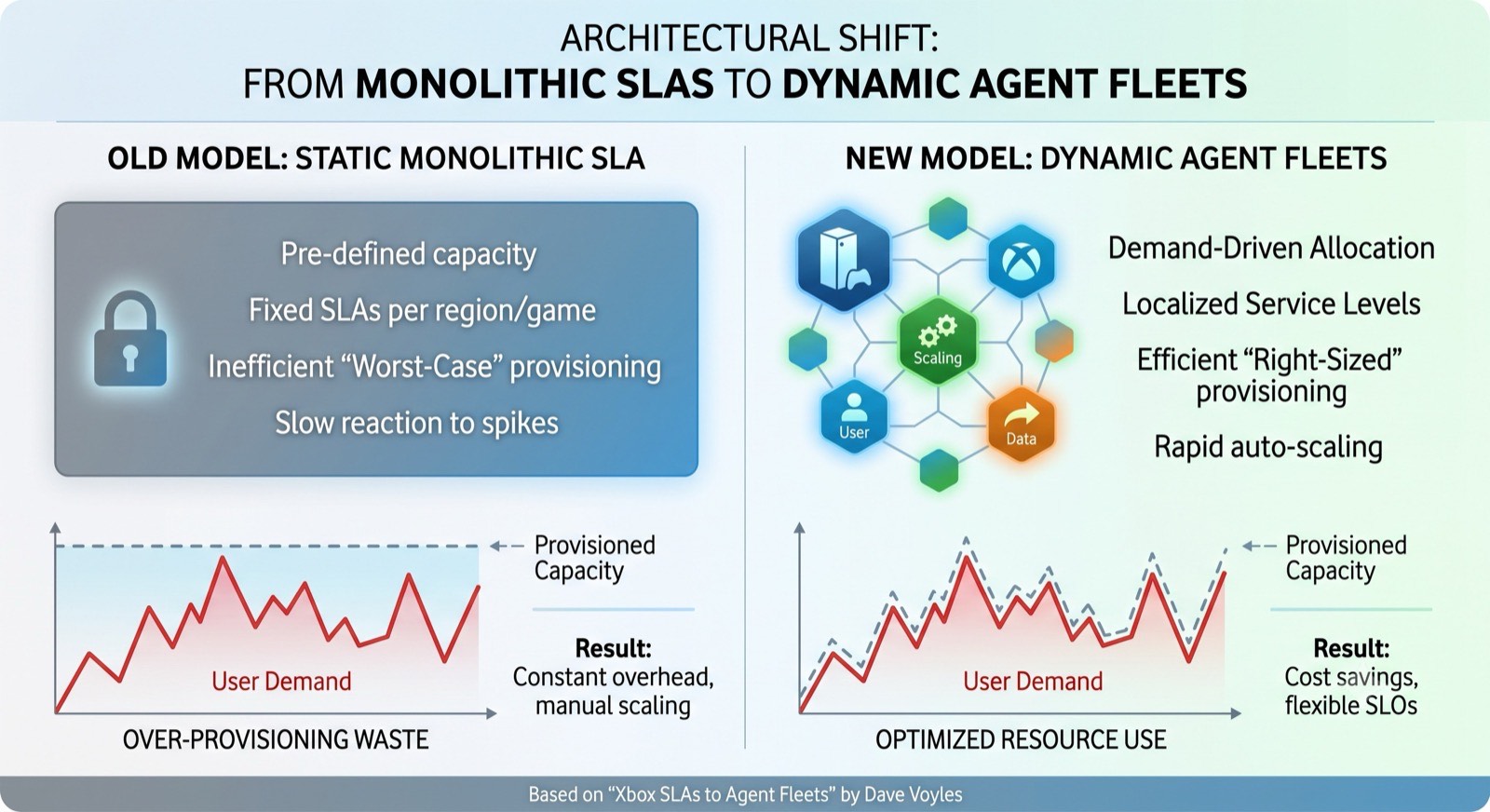
Diagram comparing static monolithic SLA provisioning to demand-driven dynamic agent fleets

From Xbox SLAs to agent fleets

This is part 4 of the Agent production system series. Previous: Docker homelab ops. Constellation: the whole agent production map — especially Orchestrator, Eval gates, and Human approval. I am a former Senior Technical Program Manager at Xbox/Microsoft. That sentence is past-tense on purpose — and it still explains how I design agent systems. People hear “TPM” and picture a calendar full of status meetings. At its best, platform TPM work is the opposite of that caricature: critical path, risk, multi-team alignment, and SLA performance under real blast radius. Someone has to know what is actually on the path to “done,” what can kill the ship window, which teams are blocked on which contract, and when a green dashboard is lying. That is the job. ...

August 7, 2026 Â· Dave Voyles
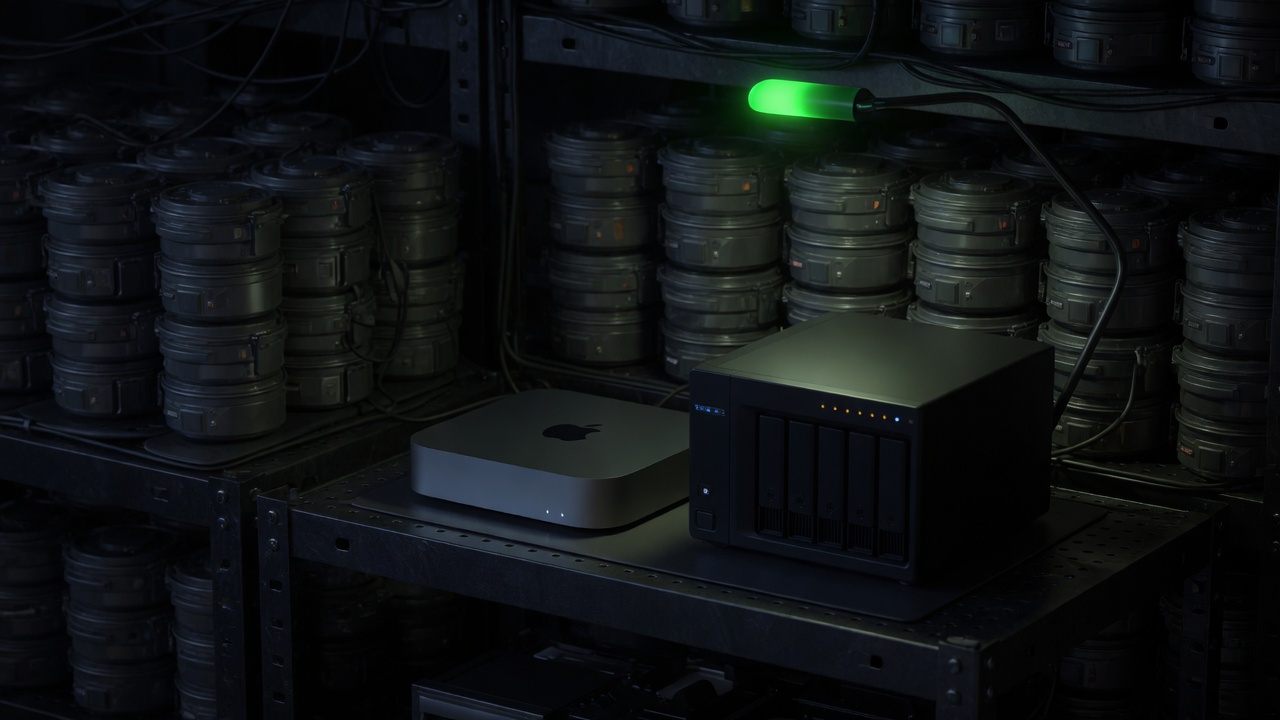
Mac Mini and NAS on a dark rack with container canisters — the homelab host layer

Twenty-plus containers and agent-operated ops

This is part 3 of the Agent production system series. Previous: Human approval. Constellation nodes: Docker host, Azure / ADO, Dashboards. Words I use below Homelab — the small, always-on computer setup in my house that runs real services for the household and for agents, not a laptop demo that dies when I close the lid Container — a boxed-up app (and its dependencies) that runs the same way on different machines; if one misbehaves, it fails in a smaller blast radius than “the whole computer” Compose — a config file that says which containers to start, how they connect, and what secrets they get, so you recreate the world from files instead of folklore OrbStack — the Docker runtime I use on the Mac Mini (think “Docker Desktop, but lighter on Apple silicon”) so containers actually run on that host Reverse proxy — one front door for many services; you hit one place instead of a pile of bookmarked :port URLs VPN gateway — a container that holds the download traffic behind a tunnel; if the tunnel drops, that traffic drops with it instead of leaking out the front door Watchtower — a helper that updates container images on a schedule, but only for services I’ve labeled as allowed to drift Agent-operated ops — agents can propose and run routine operations under the same gates as code — not root plus good intentions Those eight words are the toolkit. Now the point. ...

August 4, 2026 Â· Dave Voyles
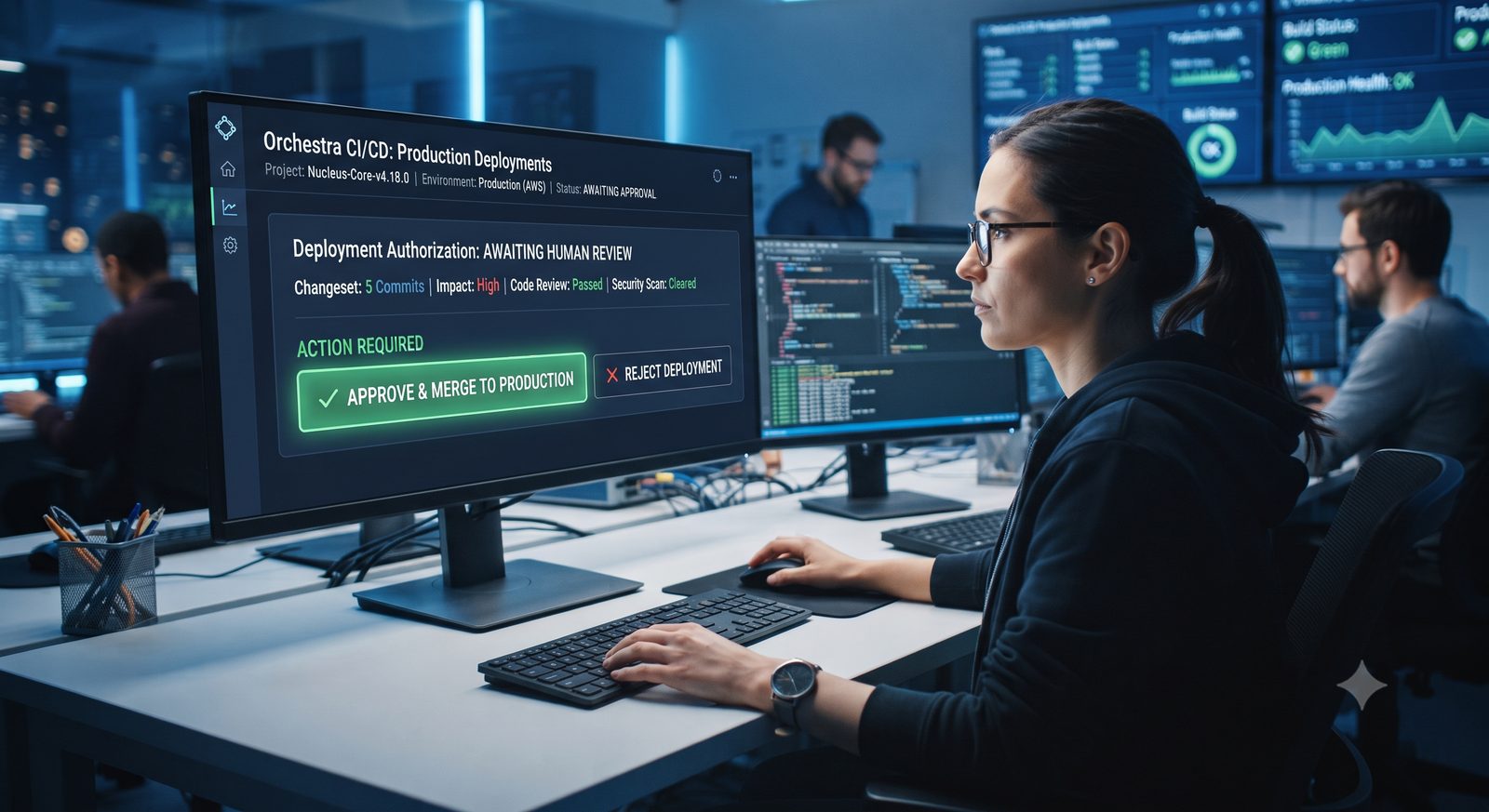
An engineer reviewing a deployment authorization screen showing Approve & Merge to Production and Reject Deployment options, awaiting human review

Human approval: the merge button still matters

This is part 2 of the Agent production system series. Previous: Eval gates are not optional theater. Constellation node: Human approval. Words I use below Agent — a program that writes code or words for you, and can use tools, in a chat or a job queue Pull request (PR) — a proposed change to a code repository; someone (or something) asks to land a diff, and reviewers say yes or no Merge — accepting that pull request into the main line of code, so the change becomes part of what ships Force-push — overwriting history on a branch; useful in cleanup, dangerous when it erases work other people (or agents) already built on Irreversible action — something hard or expensive to undo (delete data, rotate a secret into the void, change production infrastructure, send a public message you cannot unsend) Approval identity — a separate login or app credential whose only job is to approve and merge a reviewed pull request (not the same credential the agent uses to write code day to day) Decision brief — a short package an agent hands a human: what it wants to do, why the gate fired, what it already checked, and what it needs you to decide — not a guilt trip and not a demand Action class — a bucket of similar actions that share one autonomy rule; routine merges after checks can be auto, irreversible carve-outs always pause Those eight words are the toolkit. Now the point. ...

July 31, 2026 Â· Dave Voyles
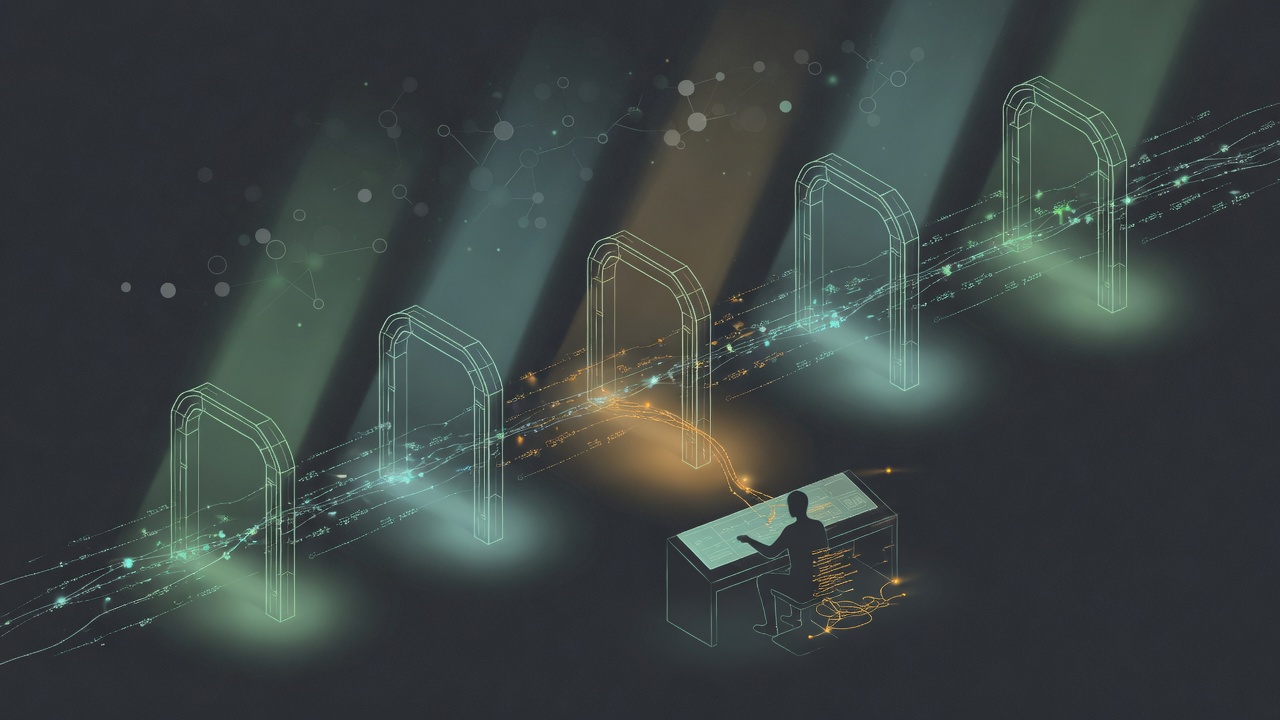
Illustration of eval checkpoint arches with human-in-the-loop control

Eval gates are not optional theater

This is part 1 of the Agent production system series. Start with the system map if you haven’t read it yet. On the interactive diagram: Eval gates. Demo agents look smart until they touch a real repo. In a demo, the agent writes the code, the code runs once, everyone claps. Nobody checks what happens the second time, or the tenth, or the time the agent decides the fastest way past a failing test is to delete the test. Then you learn the hard lesson: intelligence without a gate is just a faster way to ship a bad change. ...

July 28, 2026 Â· Dave Voyles
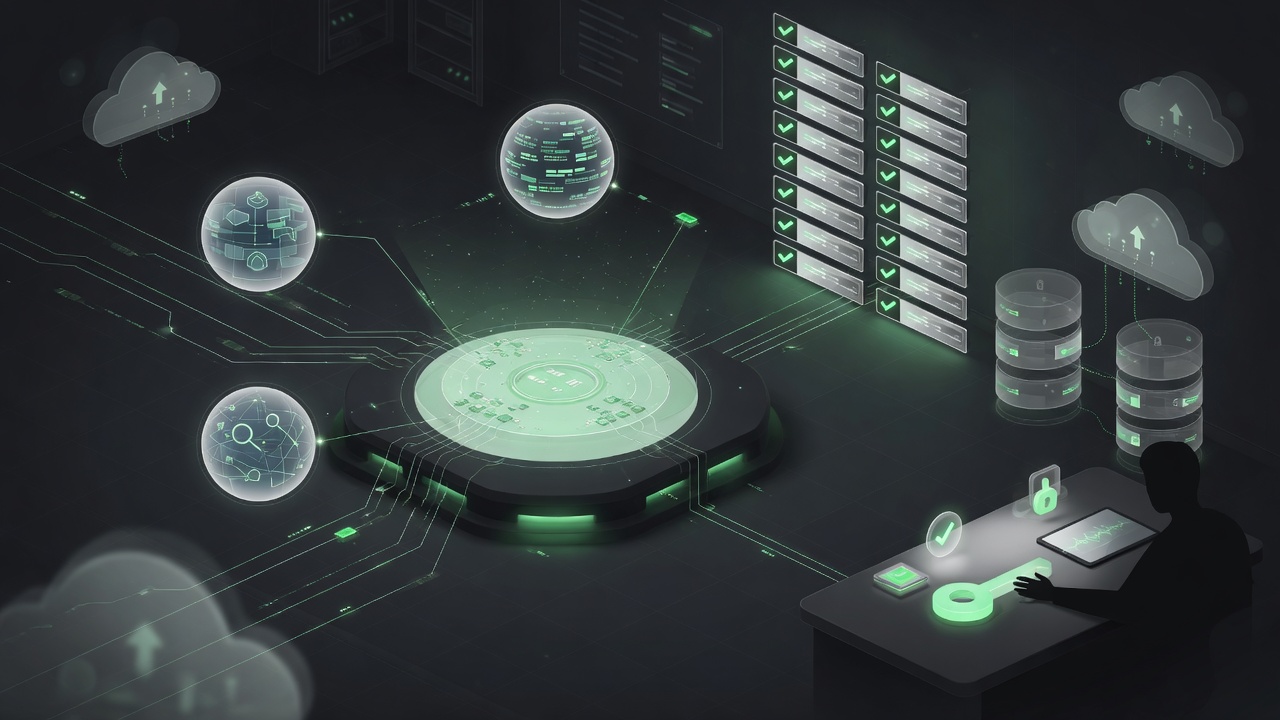
Illustration of a multi-agent production system: central orchestrator hub, agent nodes, eval checks, cloud hosts, and a human approval station

How I run an agent production system

Most “AI agent” demos stop at a chat box. What I care about is the opposite: a production system with routing, tools, gates, hosts, and a human who still owns irreversible decisions. This post is the written version of the interactive map on my About page — how the fleet is wired, what each layer is for, and what I refuse to automate. The mental model Think factory floor, not chatbot: ...

July 24, 2026 Â· Dave Voyles
We're Back! A Dinosaur's Story

We're Back

It’s been about six years since the last post here — heads-down at Xbox/Microsoft will do that to a blog. I’m picking this back up. Expect more content soon, mostly around AI and agentic workflows, the models behind them, engineering best practices, and video games — the same mix of tech and games this site has always been about, just with a few years of new things to say. Thanks for sticking around. More soon.

July 21, 2026 Â· Dave Voyles

Hello World

Welcome to my blog! This is the first post on my newly rebuilt Hugo site. I’m excited to share my thoughts, projects, and insights here. This site is powered by Hugo and deployed to GitHub Pages, making it fast, static, and easy to maintain. More posts coming soon!

January 15, 2024 Â· Dave Voyles

Tutorials: Creating your first website with Azure

My Tech Evangelist colleagues, Joe Raio and Brian Sherwin, have create a great set of video tutorials on how to create your own website using Azure. This is part of Microsoft’s Choose to Code campaign, which guides your middle and high school students through a series of online tutorials walking them through the process of creating and publishing their own website. If you are using Azure Passes, watch this video If you are using DreamSpark, start with this video Course Setup and Azure Activation Building your very first web page with HTML using Visual Studio Online! Let’s learn how to add some style to your page with CSS Make your website mobile friendly using Bootstrap Making your website interactive using JavaScript Learn how to use jQuery to send and receive data Still need Azure? Reach out to me to inquire about BizSpark

December 14, 2015 Â· Dave Voyles

My 10th weekly newsletter is out!

If you find some links that you think would be useful, feel free to share! You can always subscribe (or unsubscribe) by clicking on the MailChimp widget on the right-hand side of this page. Here’s a link to the original file. Gaming The Flame In The Flood – Adventure game on Kickstarter Here’s Why We Need Video Games In Every Classroom “How Long To Beat” -> useful site that tells you how long it takes to beat a game Game Dev Reverse engineering Yoda Stories VC / Startups The unexpected and uneven evolution of the startup fundraising market What is the definition of a seed round or an A round? A Couple Of Good Books For Entrepreneurs Seed Round Pricing (Actual data warning!) The Coming Meltdown in College Education & Why The Economy Won’t Get Better Any Time Soon 25 Angel Investors in New York You Need to Know From board games to beer-making machines: Take a look at the Seattle startup scene Nerdy / Tech 100 Technical Things Non-Technical People Can Learn To Make Their Lives Easier HTML5 PhoneGap Day US 2014, in San Francisco Apache Cordova 4 released

October 17, 2014 Â· Dave Voyles