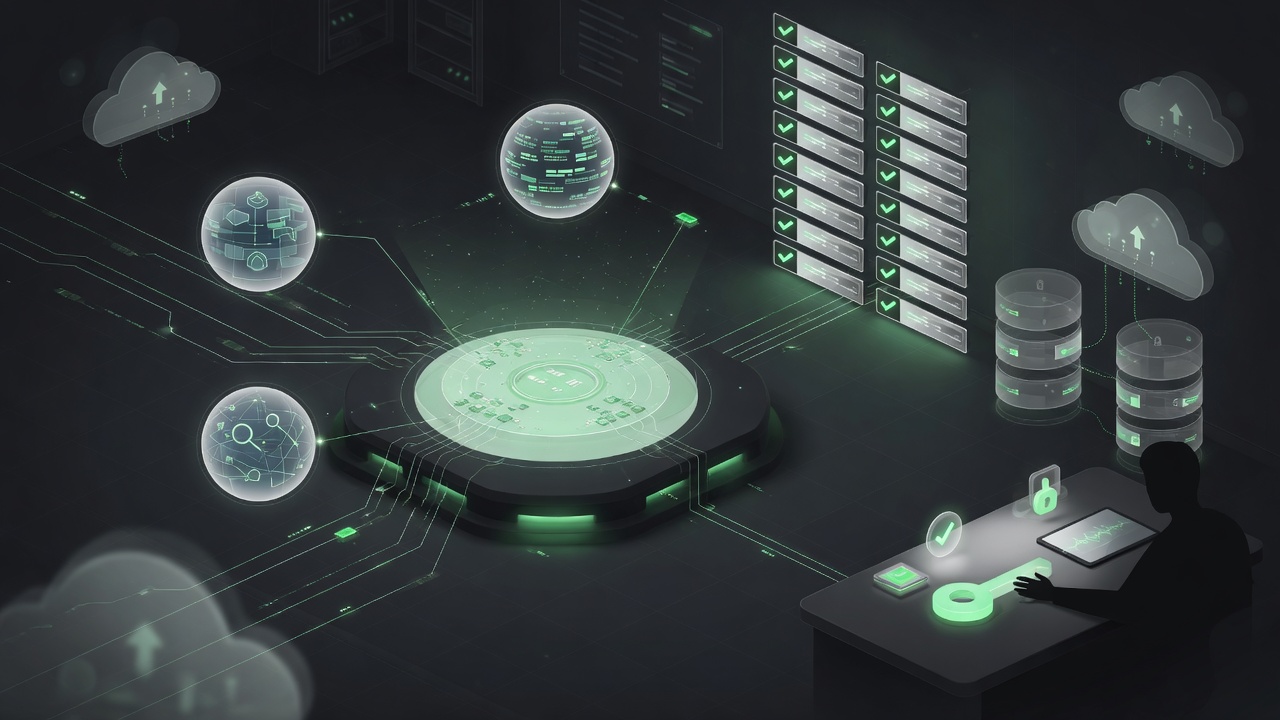
Most “AI agent” demos stop at a chat box. What I care about is the opposite: a production system with routing, tools, gates, hosts, and a human who still owns irreversible decisions.
This post is the written version of the interactive map on my About page — how the fleet is wired, what each layer is for, and what I refuse to automate.
The mental model
Think factory floor, not chatbot:
- Work arrives (a request, a board card, a plan deliverable).
- An orchestrator assigns specialist agents.
- Agents use skills/tools and retrieval — they don’t invent from nothing when sources exist.
- Eval gates check the result (tests, policy, claim safety).
- Human approval catches irreversible or high-blast-radius moves.
- Docker + Azure host the runtime and cloud surface; dashboards show status.
That topology lives as a constellation on About. Click any node for a plain-English role, or deep-link a piece of the system (for example /about/?node=eval).
What each layer does
Agents & orchestration
- LLM router — pick the right model or agent for cost and capability, not one vendor for everything.
- Orchestrator — holds the critical path; decomposes and assigns planner / coder / search work.
- Planner / Coder / Search — plan, implement in isolation, retrieve with citations.
- Skills / tools + MCP — shared craft library and structured interfaces so agents share one contract for vaults, boards, and external systems.
I extend and operate multi-agent platforms and skill fleets. I do not claim original authorship of upstream open-source agent projects I integrate.
Gates & program control
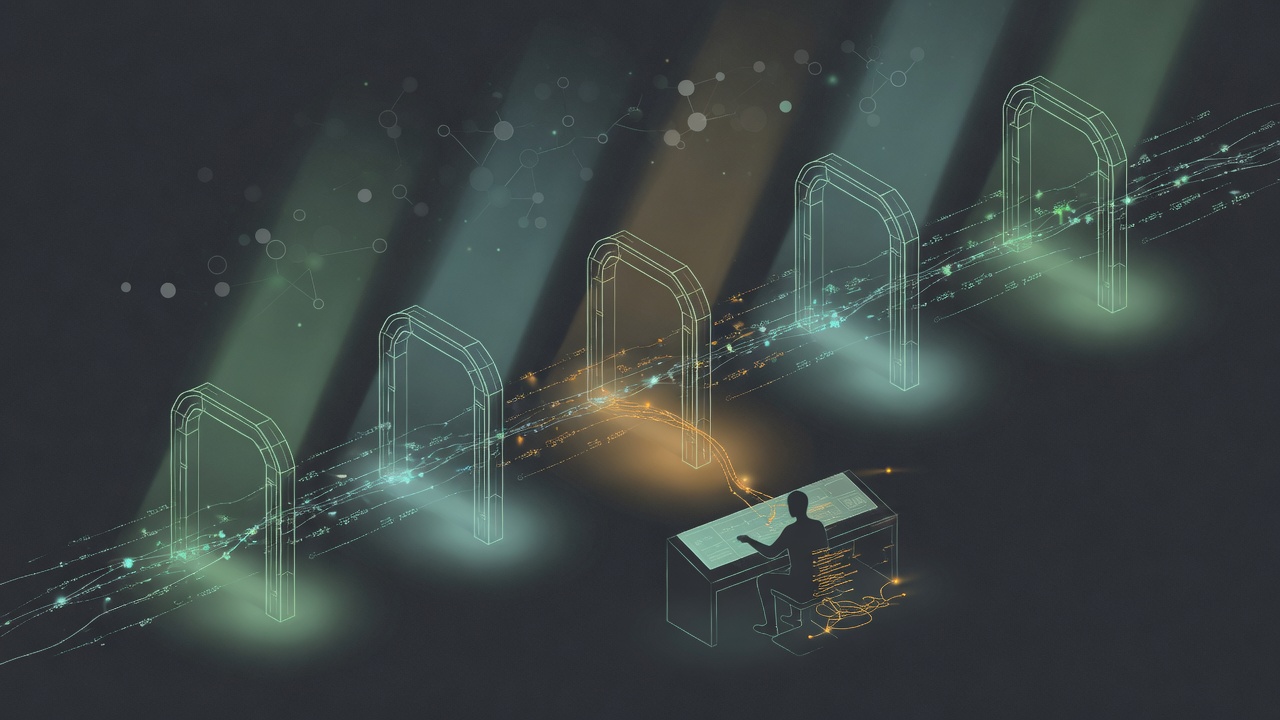
- Eval gates — fail-closed automated checks before merge. Green is not theater.
- Human approval — hard stop when the blast radius is real (force-push, secrets, irreversible infra, ambiguous validation).
This is the TPM muscle: critical path, risk, and exec-grade judgment — applied to agent fleets instead of only human teams.
Production hosts & web control surfaces
- Docker host — 20+ production containers on a homelab I operate, including agent runtimes and supporting services, with hardened defaults.
- Azure / ADO-style delivery — cloud and pipeline surface where work meets real SLAs.
- Dashboards — web as observability and status, supporting the system rather than defining the identity.
Practices that matter more than model choice
Verification before trust. Delegated agent work gets re-checked. Worktree isolation is the default so concurrent sessions don’t trample each other.
Claim safety. Numbers and authorship stay tied to evidence. Prefer “extended and operates” over “I invented X.” The About metrics and impact cards follow the same rule.
Incident-driven hardening. When something burns (rate limits, collisions, bad merges), the fix goes into policy and gates — not a sticky note.
Fail-closed defaults. Ambiguous or destructive actions escalate. Autonomy is earned per action class, not a global “agents can do anything” switch.
How this connects to Xbox-scale work
The same execution rigor shows up in platform programs I led at Xbox/Microsoft:
- Legacy commerce retirement protecting roughly $50M annual revenue, zero downtime.
- Publishing pipeline re-architecture from 12 hours → 30-minute target SLA.
- 10+ years across Xbox, CSE, DX/DPE, and Reactor.
Agent fleets don’t replace that background — they inherit it. Shipping multi-team platform work under SLA pressure is the same muscle as shipping agent-operated changes under eval gates and human approval.
Public artifacts
| Surface | What you’ll see |
|---|---|
| About constellation | Interactive system map (SVG + WebGL), node details, ?cluster= / ?node= links |
| Resume Builder | Evidence-backed job-search tooling with claim discipline |
| Philly Lax Viz | Production sports PWA |
| CFB 26 Playbooks | WebGL coaching / playbook explorer |
What this is not
- Not a career org chart or skill mind-map.
- Not a promise that every agent action is unattended.
- Not a dump of unverified vanity metrics.
If you only click one thing after this post, open the agent production system map and select Eval gates and Human approval. That’s the product thesis: agents move work; controls keep it real.
This series
Twice-weekly deep-dives that expand this map. Status is computed at
build time from each post’s date — Live once that day has passed,
Scheduled until then. No hand-maintained labels.
| # | Post | Status |
|---|---|---|
| 0 | How I run an agent production system (this post) | Live |
| 1 | Eval gates are not optional theater | Live |
| 2 | Human approval: the merge button still matters | Live |
| 3 | Twenty-plus containers and agent-operated ops | Live |
| 4 | From Xbox SLAs to agent fleets | Live |
| 5 | Claim safety: evidence before metrics | Live |
| 6 | What I will not automate | Live |
| 7 | Don't paste your GitHub key in chat | Live |
| 8 | The last click is still yours | Live |
Parts ship on their scheduled date (auto-publish: draft = false + daily rebuild). Series prev/next at the bottom of each part is generated from front matter once siblings are live. Operator schedule (slugs + dates): docs/series/agent-production-system.md.